
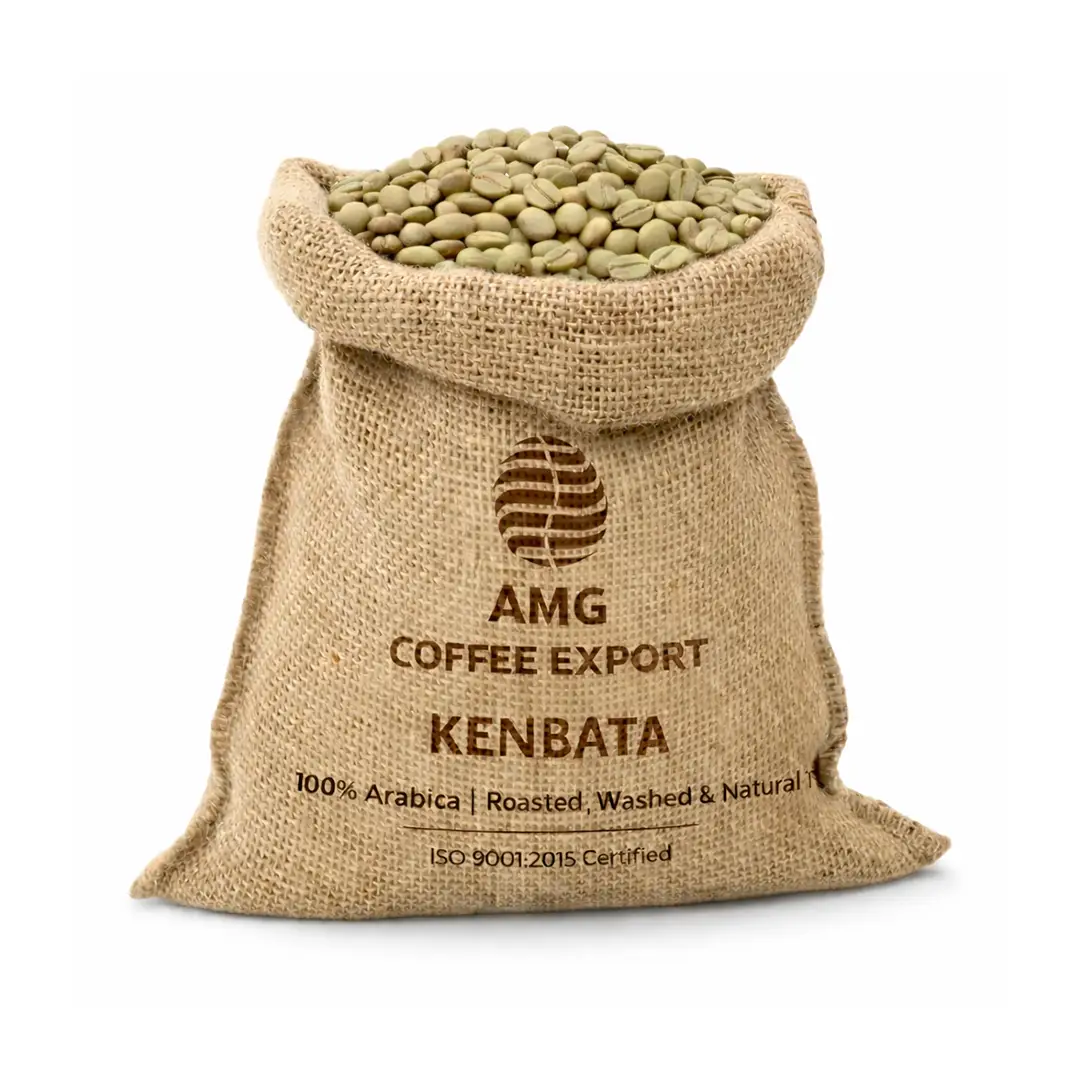

Kenbata

Kenbata coffee beans are 100% Ethiopian Arabica grown in the elevated agricultural belt of southern Ethiopia, supplied as green and roasted single-origin beans in export-grade Gute bags. Produced under mixed-farming systems where coffee is intercropped with food crops, Kenbata coffee is valued for its steady cup behaviour, restrained acidity, and dependable extraction characteristics for wholesale and commercial use.

Roasted / Green coffee(Washed & Natural)

Light / Medium / Dark

1,2,3,4

30kg, 50 kg, 60kg, 85 kg

Policies

Wholesale and export orders placed with AFAM International are confirmed upon mutual agreement of product specifications, quantity, pricing, and shipping terms. All wholesale products supplied under AFAM are processed, packed, and dispatched from Ethiopia through AMG Coffee’s certified facilities under direct dealership authorization.

Wholesale order cancellations are accepted only before production scheduling or logistics allocation. Once processing, packing, or export documentation has commenced, cancellations are not permitted due to supply chain commitments and international shipping arrangements.

Refunds for wholesale and export coffee orders are considered only in the event of verified company-side quality defects, documentation errors, or shipment discrepancies. No refunds are issued for buyer preference changes, market conditions, or transit delays beyond carrier control. Where applicable, refunds are processed via bank transfer within a maximum of 10 working days following claim approval.

Processing & Export Infrastructure

All Kenbata coffee supplied through AFAM International DMCC is sourced and exported by AMG Coffee Ethiopia, which manages vertically aligned washing, cleaning, grading, and export preparation systems within Ethiopia. Coffee is aggregated through organized smallholder networks and cooperative supply structures across the Kembata–Tembaro zone, with ECX-registered sourcing used where required. Primary processing is completed near origin, followed by final quality calibration, moisture stabilization, and defect sorting at export facilities in Addis Ababa. Supporting agricultural processing infrastructure is maintained in Adama, approximately 100 km from the capital. The export system supports annual handling capacity of up to 28,800 metric tons, enabling continuity of supply for institutional buyers, distributors, and long-term wholesale contracts.

Kenbata Origin – Agricultural Context & Coffee Behaviour

The Kenbata (Kembata-Tembaro) zone lies in southern Ethiopia and is defined by rolling highlands, moderate rainfall cycles, and diversified agriculture. Unlike forest-based or estate-dominated regions, coffee here is cultivated alongside staple crops, creating stable micro-environments that favour uniform cherry development rather than extreme flavour expression. This agricultural structure results in coffees with predictable density, controlled moisture behaviour, and low volatility during roasting. Kenbata coffee does not aim for aromatic intensity or high-acid clarity; instead, it offers structural reliability that appeals to buyers managing volume, consistency, and repeatable extraction. In the cup, Kenbata coffee typically presents soft sweetness, subdued cocoa and grain notes, low to medium acidity, and a rounded finish. The profile is intentionally neutral-leaning, making it adaptable across espresso, milk-based beverages, and commercial blend formulations.